Design Research & Integration, 2013
Collaboration with Vidhi Goel and Miguel Olivares under the guidance of IDEO
Build is a new restaurant that reimagines fast food for children between the ages of 1 and 5. This 11-week design research process involved deeply researching current fast food and parent-child relationships, and integrating the findings into a proposal for a new type of restaurant - "redesigning fast food." The final concept answers the question of not only how to get kids to like healthy food but also how to encourage parents to let kids try it.
The Concept:
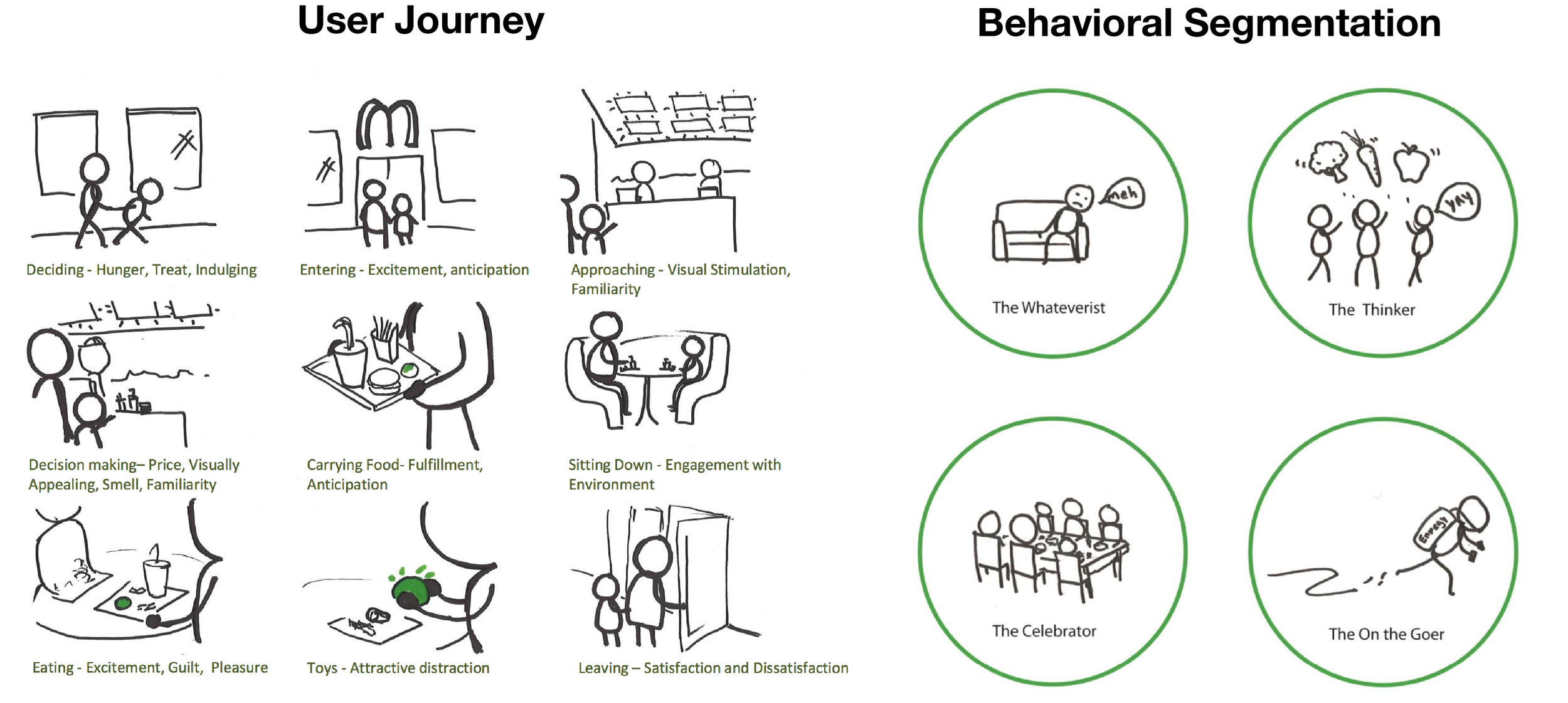
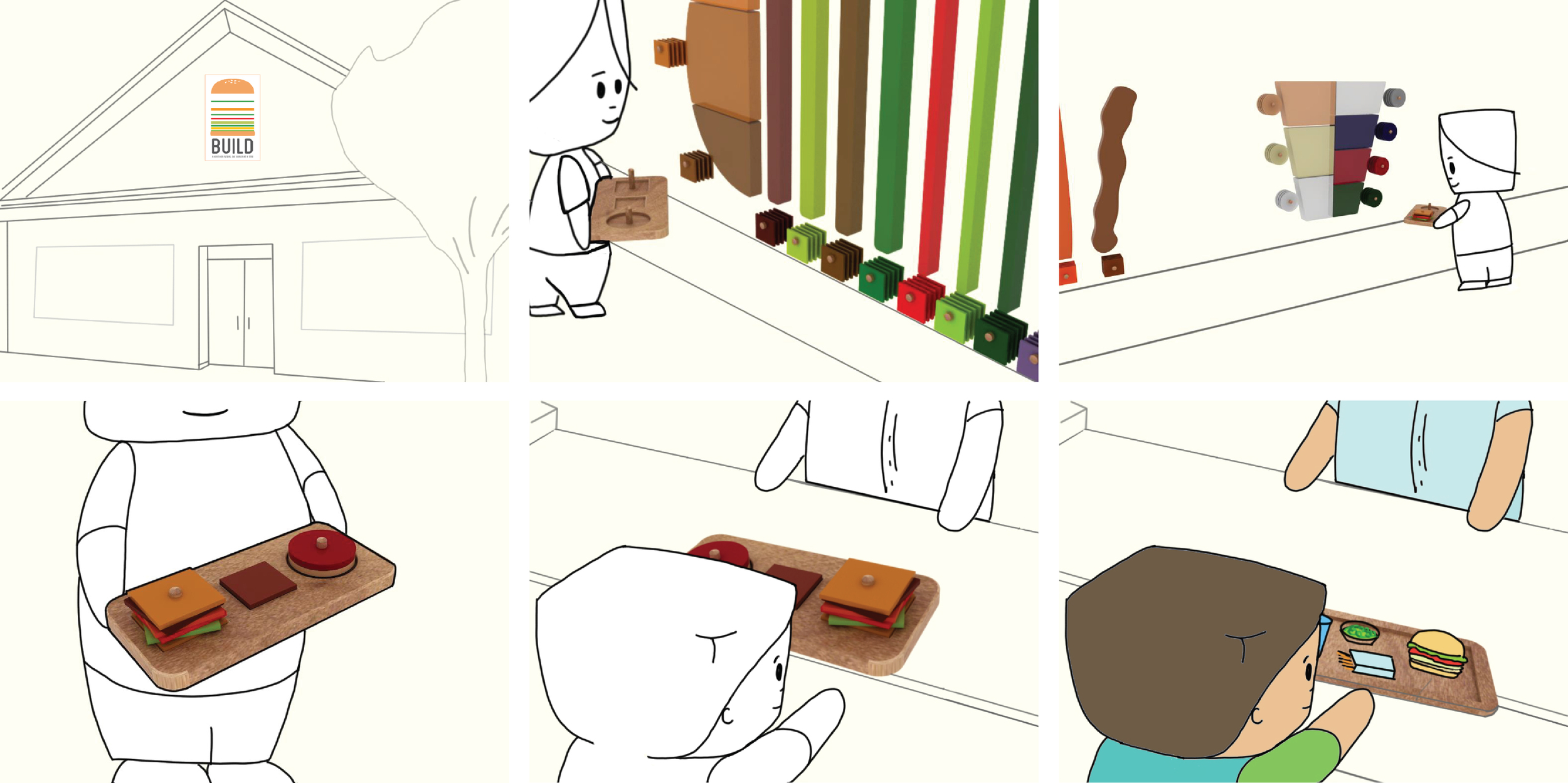
Build makes nutrition simple and fun by introducing healthy food through a familiar framework that current fast food restaurants have. It does this by modifying the entire ordering process and menu design to make it a more playful and engaging ordering experience.
In addition to product and service design, Build is also food design. The menu items were strategically created to be healthy, visually recognizable, and kid-friendly. Build puts decision making into children's hands and inspires healthy habits. The restaurant's philosophy is culminated in its tagline - building a healthier future, one burger at a time.
The Process:
The design research process involved field research, interviewing specialists and parents, identifying insights and design opportunities, testing prototypes, and communicating the concept through a video.

Project Journey
Using the human-centered design process, the research was the heart of the project.
Field Research & Interviews


Interviews
We conducted 7 in-depth interviews, ranging from nutritionists, healthy eating specialists, parents who take their children to fast food restaurants, and parents who do not.
Research synthesis

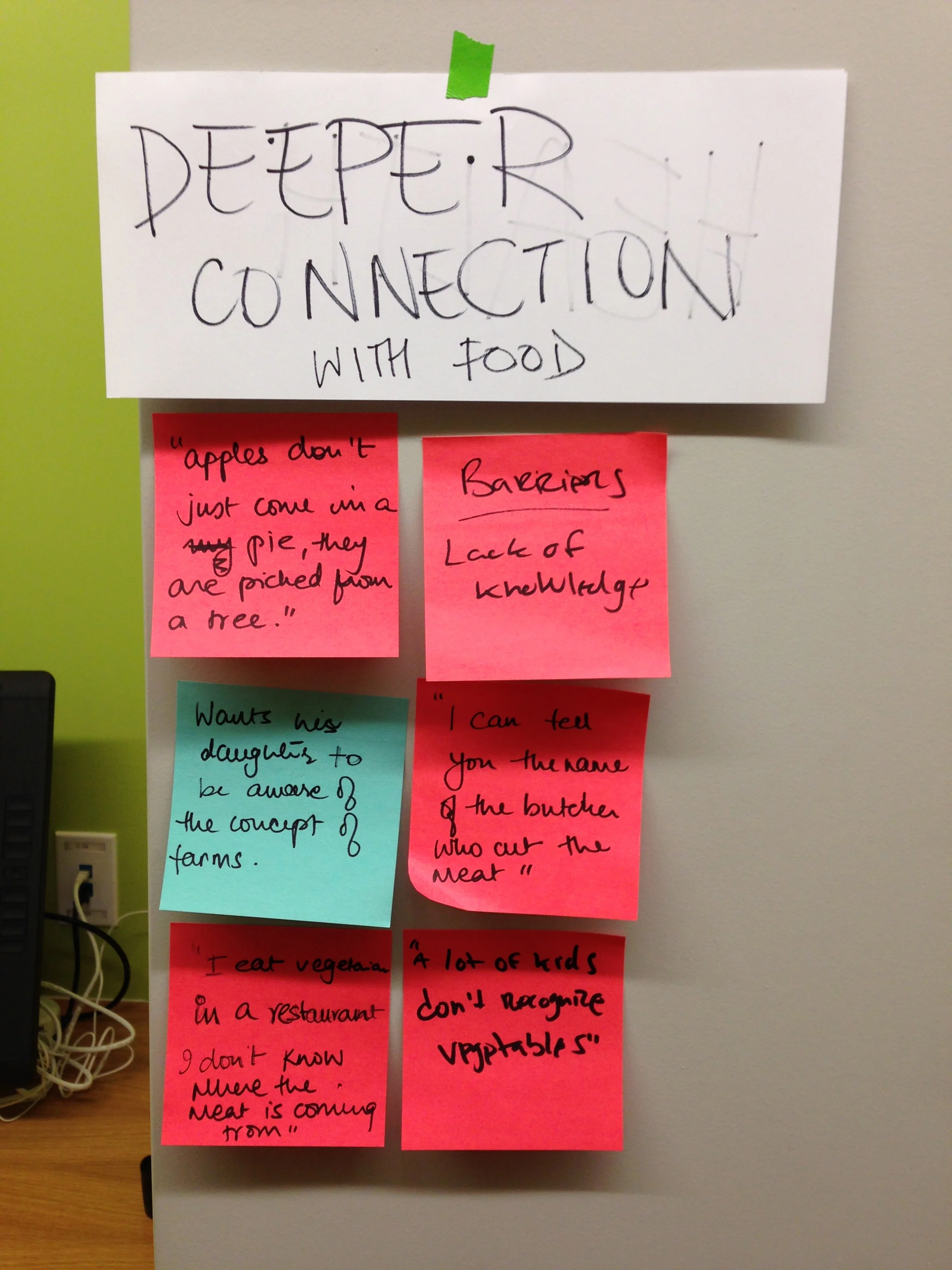
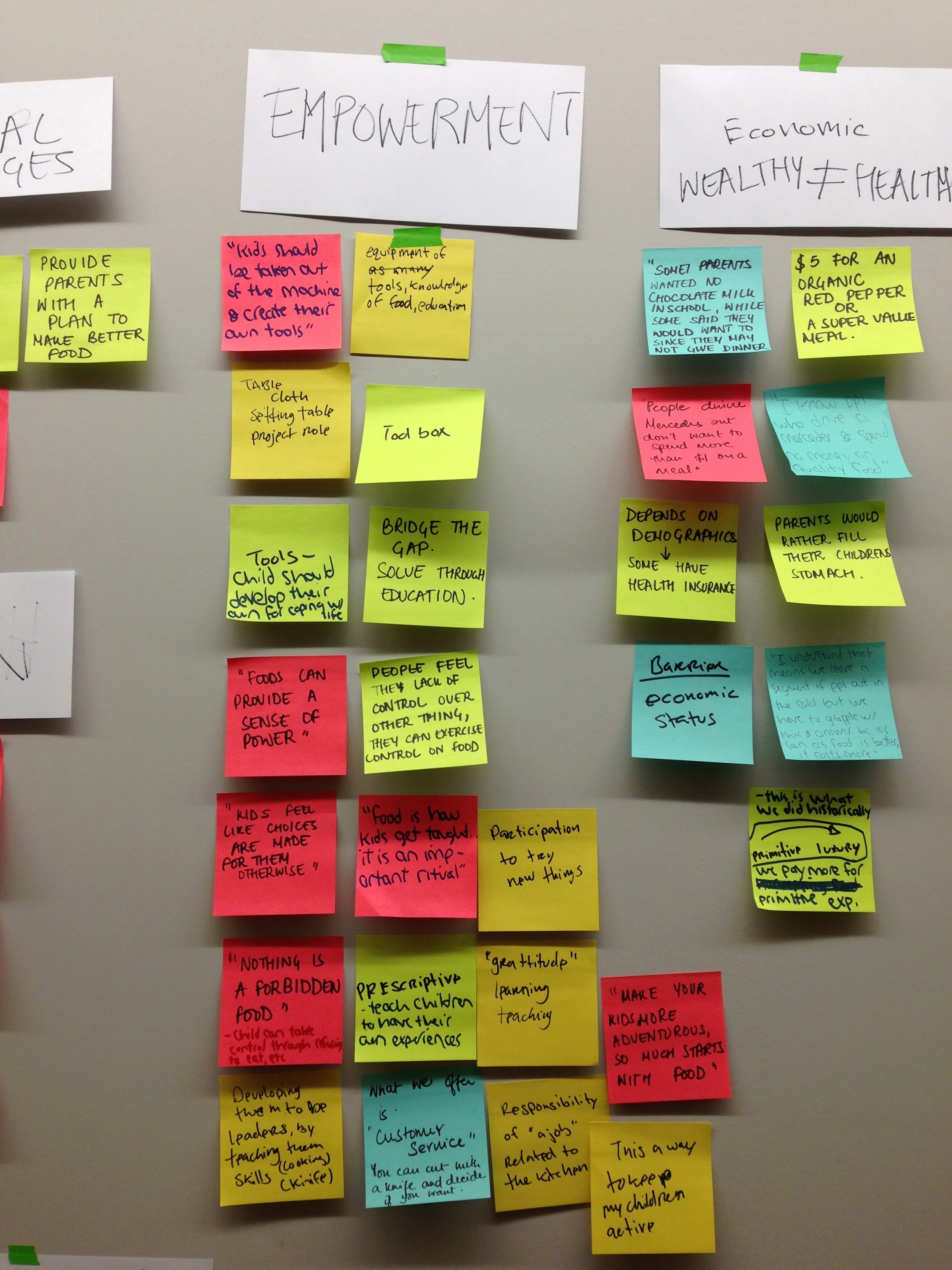
These interviews and user observations informed key insights and design opportunities.




Concept Development


Final Concept

Restaurant Identity
The restaurant's brand speaks to the playful and action-driven take on nutrition.

Prototype Testing & Intercept Interviews
We brought the research to life with quick, physical prototypes. These mock up menus were used to conduct prototype tests via intercept interviews, getting both parent and child feedback. We spoke to several parents and had children interaction with the menu prototype. These tests helped answer lingering questions and further refine insights.


